

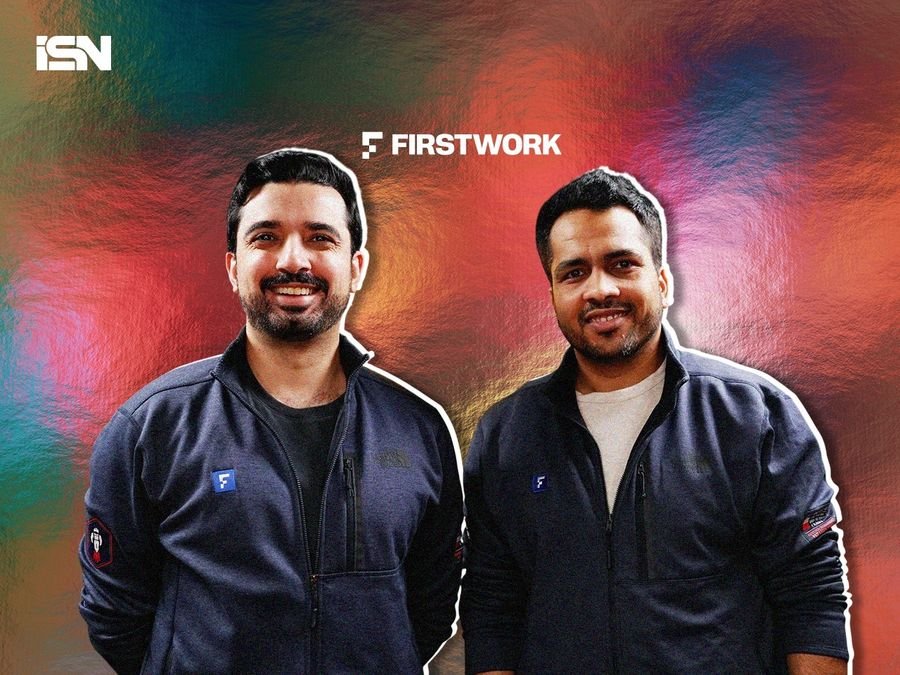
Firstwork, a Y Combinator-backed startup that uses AI agents to get frontline workers cleared and ready for their first shift, has raised $15 million in a Series A round led by Earlybird Venture Capital.

Legion VC and Deel Ventures joined the round as new investors, along with existing backers Gradient and Y Combinator. SOMA Capital, 468 Capital and Houghton Street Ventures also took part, according to reports.
The new funding takes its total raised to $20 million since it was founded in 2024. It did not disclose its valuation.
About 80% of Firstwork’s workforce operates from Bengaluru. The startup has about 45 employees and is opening a London office to support its European customers.
Firstwork plans to use the capital to grow its applied AI, AI research, engineering and go-to-market teams, and to deepen its presence in the US and Europe.
It also plans to take its agents beyond onboarding into later stages of employment, including credential renewals, recurring training and ongoing compliance management, the startup said.
Kapoor and Shubham Choudhary started Firstwork in 2024 and went through Y Combinator’s Summer 2024 batch, where the startup pitched itself as “Rippling for seasonal workers”. It raised a $5 million seed round in February 2025.
Kapoor earlier led the Asia-Pacific business at money transfer company Remitly and headed strategy at food delivery company Deliveroo in Singapore. At Deliveroo he recruited thousands of frontline workers, according to reports.
Choudhary, the CTO, was a Director of Engineering at Deel. Before that he built core infrastructure for Rippling’s employer of record systems.
What Firstwork does
Firstwork focuses on the stretch between a worker accepting a job and turning up for the first shift. In sectors such as healthcare, logistics and delivery, that gap is filled with paperwork, and many candidates drop out before they start.
Its AI agents handle document verification, background and right-to-work checks, onboarding, training coordination, compliance management and follow-ups with workers.
The agents contact candidates by text or phone to ask for documents and arrange training, and they work inside an employer’s existing HR, payroll and screening systems, so customers do not have to replace their software.
The startup said more than 1.5 lakh frontline workers now start work through its platform every month. Customers including Deel, Job&Talent, Relay, Wonolo and BGSF have cut the time workers and HR teams spend on each new hire by up to 90%, it said.
At one of its largest customers, the platform helped triple the number of qualified applicants who reached their first shift.
“The systems employers rely on were built to record what happened, not to actually do the work,” said Vardhan Kapoor, co-founder and CEO of Firstwork.
Kapoor said the platform supports workers “from the moment they apply through every stage of their employment.”
Tim Rehder, General Partner at Earlybird Venture Capital, said Firstwork is addressing “one of the largest untouched opportunities for applied AI in enterprise software.”
He said its agents are “performing millions of actions every month to reduce the time to clear a worker from days to minutes.”
Rehder added that “Firstwork competes for the far larger budget employers spend on people and outsourced teams who do onboarding by hand.”
Deel, the HR and payroll company valued at $17.3 billion, is both a customer and, through Deel Ventures, now an investor.
Indian startups in the same space
Several Indian startups are building AI tools for frontline and gig worker hiring.
Bengaluru-based Hunar.AI raised Rs 39.3 crore in a Series A round led by Blume Ventures this week. Its conversational AI agents handle sourcing, screening, onboarding, training and retention over voice, WhatsApp and chat, and its clients include Swiggy, Delhivery, Flipkart and Blue Dart.
Hyderabad-based TurboHire raised $6 million in a Series A round led by IvyCap Ventures in August 2025 for its agentic AI recruitment platform. TraqCheck offers AI-powered background verification and recruitment agents, while HireBound automates candidate sourcing, screening and evaluation.
The demand for such tools in India is tied to the growth of gig work. NITI Aayog projects that India’s gig workforce will grow from around 1 crore workers in 2024-25 to 2.35 crore by 2029-30.