

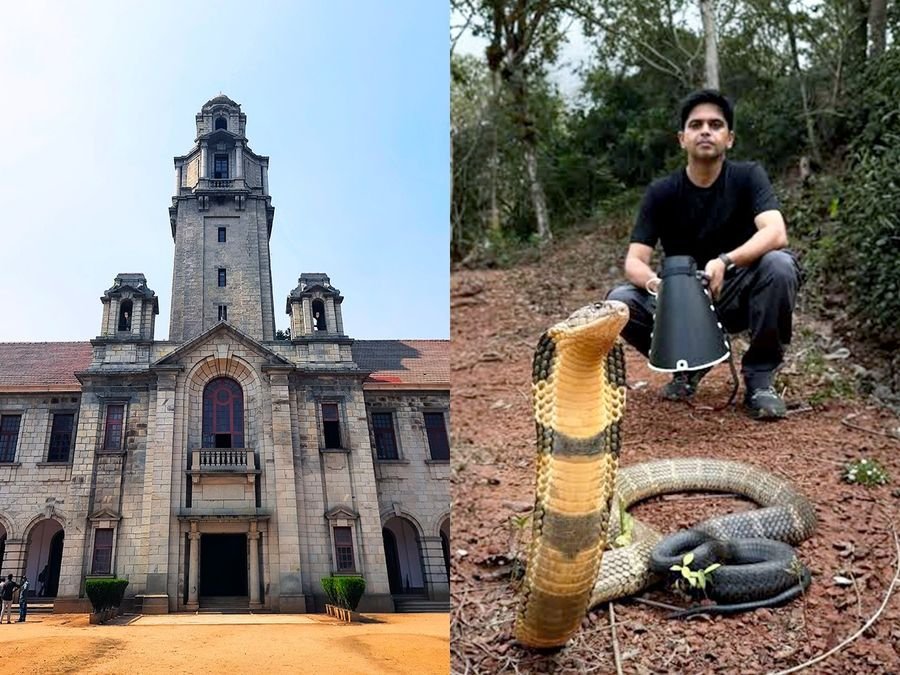
Venomics AI, a Bengaluru biotech startup spun out of the Indian Institute of Science (IISc), has raised $2.7 million in a pre-seed fundin round co-led by Speciale Invest and South Park Commons, with participation from Operators Studio.

The startup uses venom biology, AI and laboratory screening to find molecules in animal venoms that can be developed into drugs.
It will use the fresh capital for expanding the Venom Atlas, its molecular dataset, and strengthening its AI and lab screening capabilities. Venomics AI also plans to hire across venom biology, computational science and drug discovery, and to validate and optimise its most promising molecules.
What Venomics AI does
Animal venoms are mixtures of molecules that have evolved to act on specific targets in the body. Some of them have already become medicines. The drug captopril was inspired by snake venom peptides, and ziconotide is derived from a cone snail venom peptide.
Venomics AI’s platform sequences venoms to build the Venom Atlas, uses AI to rank likely drug candidates, and then tests those predictions in its own lab. The results of each round of testing feed back into the next set of predictions and into molecular design.
“Animal venoms represent one of nature’s richest yet least explored sources of potential medicines, and at Venomics AI, we are combining cutting-edge experimental science with artificial intelligence to unlock this extraordinary potential,” said Kartik Sunagar, Founder and Director of Venomics AI.
He said the funding would help build a drug discovery platform that “leverages India’s exceptional biodiversity and scientific talent to discover and develop breakthrough therapeutics in India, for the world.”
Who are the founders?
Sunagar is an Associate Professor at IISc’s Centre for Ecological Sciences, where he leads the Evolutionary Venomics Lab. His research covers venom evolution and antivenom development.
In February 2024, his lab and the Scripps Research Institute in the US reported a synthetic human antibody that neutralises a neurotoxin produced by cobras, king cobras, kraits and black mambas. IISc said the antibody was nearly 15 times more effective than conventional antivenom in animal tests.
In September this year, IISc and the Technical University of Denmark published work in Science Translational Medicine on a nanobody-based antivenom that protected mice against venom from several cobra species found in India.
“Antivenom treatment has virtually not changed for over 100 years,” Sunagar said at the time.
Notably, India reports about 50,000 snakebite deaths a year, the highest in the world.
Co-founder and CTO Vinay Prabhu holds a PhD from Carnegie Mellon University and works on machine learning and large-scale AI systems. He was earlier Chief Scientist at UnifyID.
Why investors backed it
Explaining the reason behind investing, Speciale Invest in a blog post estimated that there are about 20 million venom peptides globally, of which fewer than 0.1% have been studied. It said public databases hold only 40,000-60,000 entries, scattered across disconnected repositories.
The firm also pointed to the selectivity of venom peptides. It said some tarantula and centipede peptides show more than 1,000-fold selectivity between two sodium channels, Nav1.7 and Nav1.5. Blocking Nav1.7 reduces pain, while blocking Nav1.5 carries the risk of cardiac arrest.
Speciale listed three venom-derived drugs approved by the US FDA: captopril, from the Brazilian pit viper; exenatide, from the Gila monster, which was the first GLP-1 drug; and ziconotide, from the cone snail. It added that India’s Biological Diversity Act requires foreign entities to get prior approval to use Indian biological resources.
“India’s venom biodiversity is among the richest in the world, and Kartik is one of the world’s leading experts on it. Few people combine his deep understanding of these venoms with the access to study them,” said Arjun Rao, General Partner at Speciale Invest.
“Venom is one of nature’s oldest targeting systems. It gave us Captopril and GLP-1s, and until now we’ve only been able to search one molecule at a time. AI changes that,” said Prateek Mehta, General Partner at South Park Commons, who leads the fund’s India office and investments from Bengaluru.
“Kartik has spent two decades in this space, and Vinay is a lifelong AI builder,” Mehta added.