
Bengaluru-based specialty chemicals startup altM has raised $10.3 million in a Series A round led by Zerodha’s Rainmatter by Zerodha and Mela Ventures.

Existing investors Omnivore, Theia Ventures, Aureolis Ventures and Spectrum Impact also participated, along with strategic angel investors.
The startup turns agricultural residue such as sugarcane bagasse and rice straw into chemicals and materials that replace fossil-derived inputs.
It will use the fresh funding for manufacturing capacity, research and development, customer qualification programmes, and its engineering and commercial teams, as it moves from pilot-scale production to commercial manufacturing.
The round comes just over three years after altM raised a $3.5 million seed round in 2023, taking its all-time raise to around $13.8 million.
What altM makes
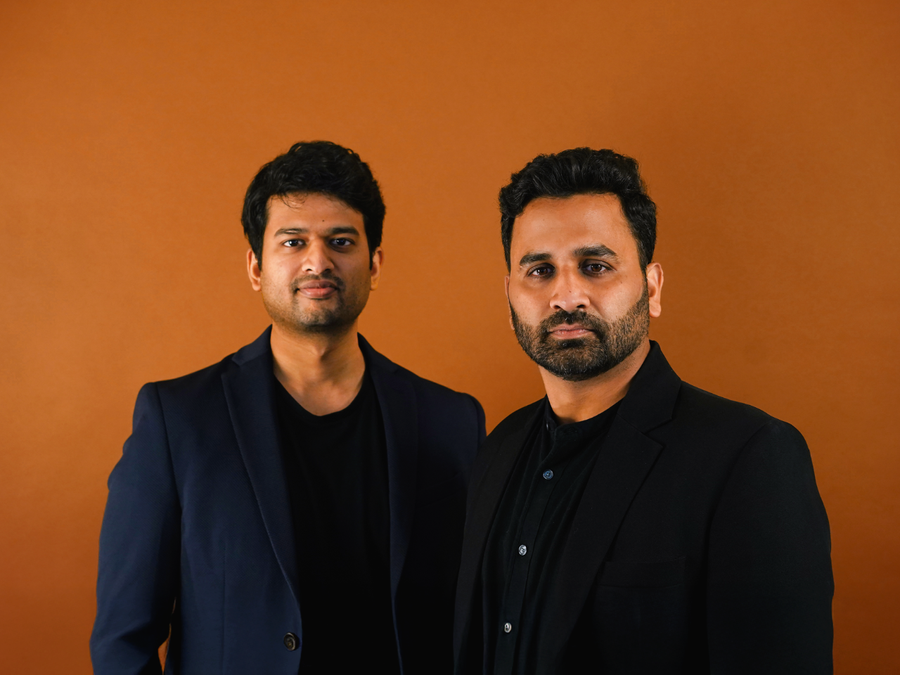
altM was founded in 2022 by Apoorv Garg and Yugal Raj Jain, who worked together in manufacturing at Tesla in the US. Bioprocessing scientist Harshad Velankar later joined as Chief Scientific Officer.
The startup works with lignocellulosic biomass, the woody, non-food part of crops. Its process first breaks the residue down into its main fractions, cellulose, hemicellulose and lignin, and then upgrades each fraction into separate chemicals. Using all the fractions lets it make several products from a single feedstock.
Its products are aimed at beauty and personal care, textiles, industrial chemicals, construction, packaging and consumer goods. The first ones moving towards commercial sale are a lignin-derived SPF booster for suncare, a cellulose-based rheology modifier, and bio-derived ferulic acid for cosmetics and personal care formulations. Its research pipeline also covers construction, electronics, automotive, polymers and battery materials.
Since the seed round, altM has built an integrated R&D and pilot manufacturing facility in Bengaluru, expanded its laboratory space nearly fivefold in less than two years, and commissioned a demonstration manufacturing unit. Six molecules have reached demonstration scale, and three have been picked for pilot plant production.
Garg claims it has filed six patents in India covering its deconstruction technology and the processes for upgrading individual molecules, and is working on a seventh.
“Industrial manufacturing has relied on fossil carbon for more than a century. We are building a new source of industrial carbon from agricultural residue,” Garg said.
“Moving a material from the laboratory to commercial production requires more than proving that it works. It requires processes that can consistently produce the same material at increasing scale,” said Yugal Raj Jain, co-founder and COO.
“India possesses an immense domestic agricultural residue base, and by transforming this surplus into high-performance biochemicals, Apoorv and Yugal are unlocking strategic industrial value,” said Abhinav Negi, Lead, Climate and Deep Tech at Rainmatter by Zerodha.
Krishnakumar N, Managing Partner at Mela Ventures, said: “At Mela, we like to invest at the inflection point, and with altM we think moment is here for creating new age materials which are more environmentally friendly.”
“Going from the lab to reliable manufacturing and, ultimately, customers is a difficult journey. altM has shown a rare ability to make that transition,” said Abhilash Sethi, Partner at Omnivore.
altM’s model depends on a steady supply of crop waste, much of which is burnt in fields in India. A Ministry of New and Renewable Energy study used for the National Biomass Atlas of India estimated surplus biomass from agricultural residues at about 230 million tonnes a year in 2017-18.
Outside India, altM has said it expects Europe to be its first international market, driven by regulations on sustainable content and emissions reduction.