
Hyderabad-based spacetech startup Cosmoserve Space has raised $6 million in a seed round led by Japan’s Rebright Partners, as it works on robotic spacecraft that can capture dead satellites and pull them out of orbit.

Aranya Holdings and Naandi Ventures joined the round, along with existing investors AUM Ventures and Shakti VC. The startup announced the funding alongside the opening of Base 1, a facility in Hyderabad for space debris removal and satellite servicing.
Cosmoserve said the capital will go towards Base 1, technology demonstrations and two upcoming missions.
The seed round is nearly twice the size of the startup’s first raise. In September 2025, it raised $3.17 million in an oversubscribed pre-seed round led by angel investor Alan Rutledge through US-based investment firm AVCF.
“Space debris is a shared global problem, and the best solutions come from teams like Cosmoserve who combine deep technical pedigree with the urgency to move fast,” said Takeshi Ebihara of Rebright Partners.
What Base 1 does
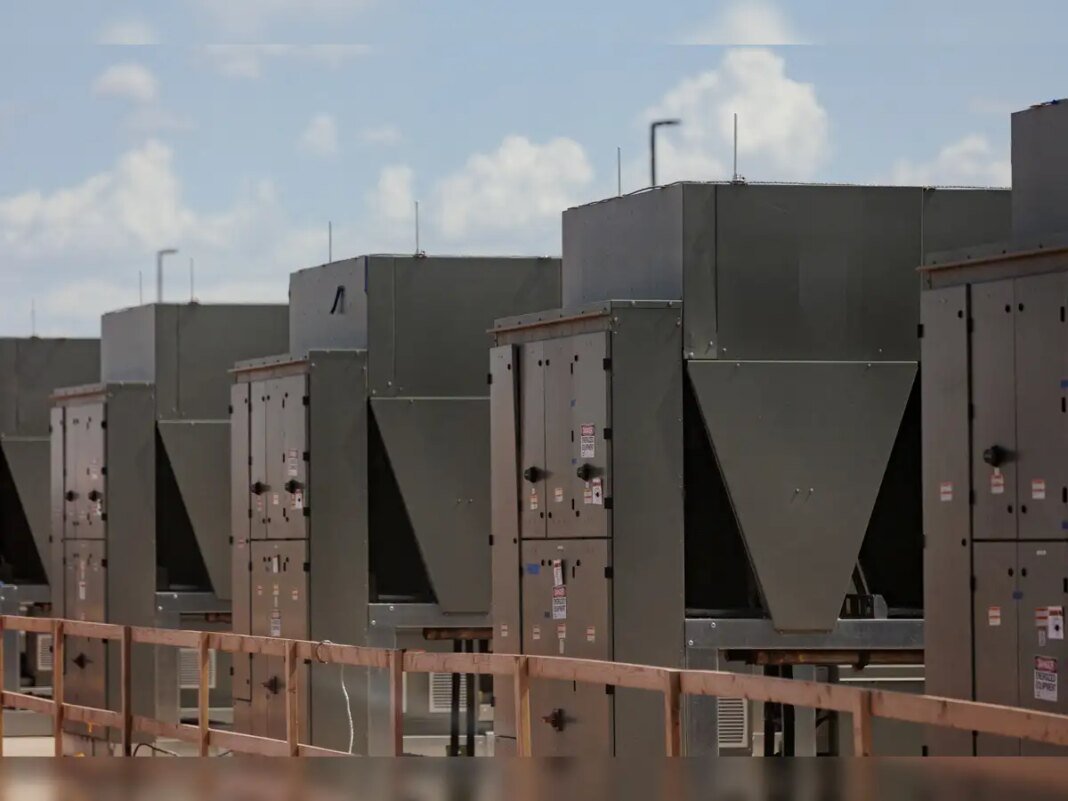
Base 1 is located at VSD Tech Park in Gachibowli and covers about 14,800 sq ft. The startup claims that it is India’s first private facility and the world’s sixth to feature space vision effects and microgravity simulation. In practice, this lets engineers recreate how objects behave in near-weightlessness and how they look under space-like lighting, so hardware can be tested before it flies.
The facility has four main parts: an orbital rendezvous and capture lab to simulate spacecraft capture operations, a space robotics innovation lab to develop robotic capture systems, an ISO Class 8 clean room for satellite integration, and a mission simulation and control centre. Beyond debris removal, it will support technologies for in-orbit repairs and refuelling of satellites.
Union Minister of State for Science and Technology Jitendra Singh and Telangana IT Minister D Sridhar Babu attended the inauguration.
“Facilities like Cosmoserve’s Base 1 show exactly why Hyderabad is leading the country in space innovation. We are now home to over 30 spacetech companies, including India’s first spacetech unicorn and a few more soonicorns,” Sridhar Babu said.
Cosmoserve currently sources close to 60% of its mission components locally. It plans to use Base 1 to build more critical technology in-house and cut its reliance on imported optics, avionics and space-grade electronics.
“Base 1 is where we build the capability to keep orbits usable, for Gaganyaan, the Bharatiya Antariksh Station and every satellite that follows,” Phanindra said.
Two spacecraft, many satellites
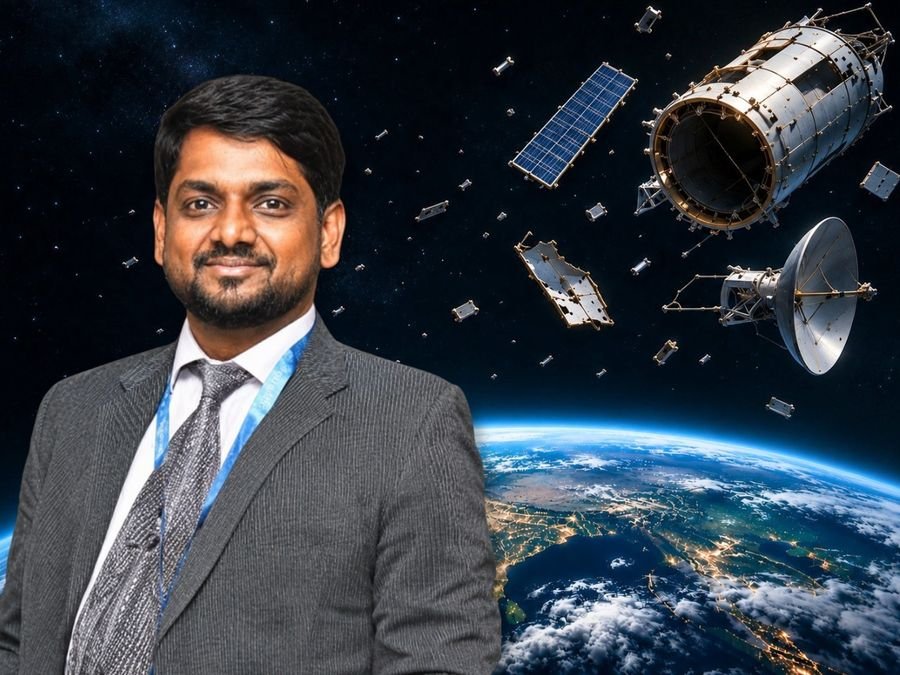
Cosmoserve’s core technology is a soft robotic capture system. Instead of rigid arms, it uses flexible robotic petals designed to wrap around and hold irregular or tumbling objects. The startup is also developing a vision-based navigation system.
Its proprietary Dual Spacecraft Architecture pairs a larger Orbital Service Station, which acts as an in-space logistics hub carrying fuel, equipment and spare parts, with a smaller Autonomous Service Vehicle. The smaller craft travels to multiple satellites to capture, dock with, diagnose, repair or remove them.
The startup said the design would let two spacecraft service up to 100 satellites, against the conventional model of one dedicated spacecraft per target. It estimates this could bring servicing costs down from around $10 million to below $1 million per satellite.
In July, Cosmoserve flew its first payload, Mission Embrace, aboard Skyroot Aerospace‘s Vikram-1, the first privately developed Indian rocket to place payloads in orbit. The flight hardware was built in under four months, six months ahead of schedule, and Phanindra said the payload cost around Rs 1 crore.
The capture system survived launch and its actuation system and onboard software worked, but the robotic petals did not open in orbit.
What comes next
Cosmoserve plans to test its capture systems on microgravity flights, refly the mission as Embrace-2 with an upgraded capture mechanism, and carry out a full-scale debris capture demonstration in 2027. In that demonstration, it aims to approach within 10 metres of a dead satellite.
The startup is targeting commercial operations by mid-2028. Phanindra said it holds letters of intent from satellite constellation operators, one from the US, one from Europe and two from India, and aims to sign one paying customer before commercial operations begin.
Dr. Chiranjeevi Phanindra B. founded Cosmoserve in June 2025 after about 15 years at ISRO, where he worked on the Gaganyaan human spaceflight programme and represented India at the Inter-Agency Space Debris Coordination Committee. The startup’s early team worked out of T-Hub in Hyderabad.
The startup’s own estimates show the scale of the problem. Of around 28,000 satellites in orbit, nearly 10,000 are dead or non-operational, and about 660 collisions and explosions in space have produced nearly 58,000 tracked debris fragments.