
Also in the letter:
■ Electric two-wheeler sales
■ AI liability rules
■ E-consent services
Fintechs step up defences against rising cyberattacks

Digital payments companies such as PhonePe, Razorpay, Cashfree and PayU are accelerating cybersecurity upgrades and automating defences as AI-powered attacks become faster and more sophisticated, executives told ET.
What’s changing: Fintechs are shifting from preventing intrusions to detecting and containing breaches before customer data or funds are compromised. Cashfree says attempted attacks have increased at least tenfold from a year ago.
Company playbook: PhonePe assesses transaction risks within milliseconds and can hold suspicious settlements or reroute payments. Cashfree is accelerating security fixes and isolating compromised systems, while PayU uses AI for security analysis and compliance checks. Razorpay has stepped up simulated attacks and round-the-clock monitoring.
Why now: Cyberattacks affected about 20 Indian financial institutions in October, ET reported, with stolen credentials used to bypass payment checks. India’s UPI processed 25.47 billion transactions worth Rs 31.53 lakh crore in October, underscoring the scale of potential exposure.
Festive spending drives record UPI transactions in October

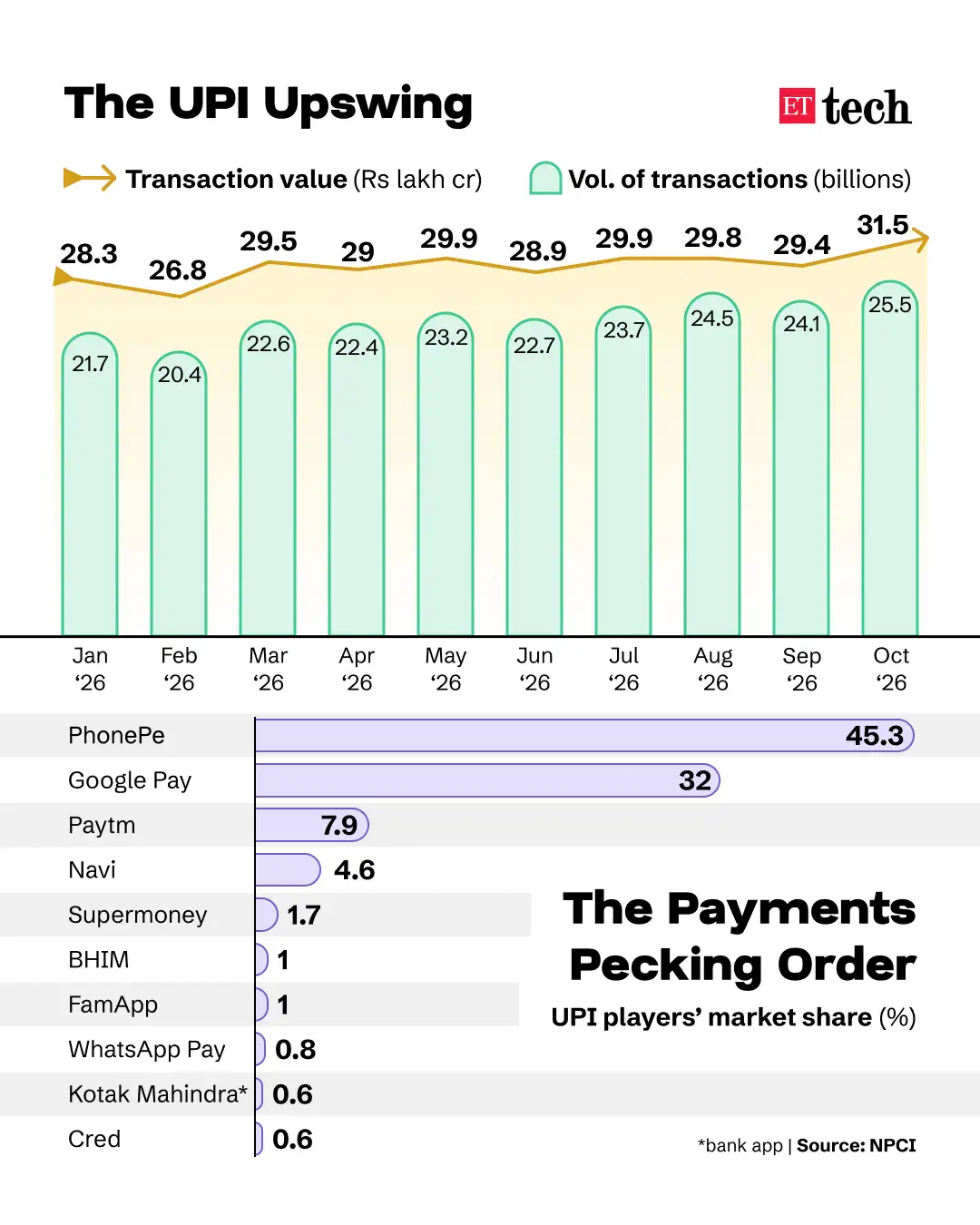
Festive spending drove an uptick in digital payments in October, with transactions on the unified payments interface (UPI) rising to record numbers, according to data released by the National Payments Corporation of India (NPCI).
By the numbers:
- UPI transactions: Hit a record 25.47 billion in October, up 23% YoY
- Transaction value: Rose 16% YoY to a record Rs 31.53 lakh crore
- Average daily transactions: Increased to 822 million in October from 802 million in September
- Average daily transaction value: Hit a record Rs 1.01 lakh crore, compared with Rs 97,913 crore in the previous month
- Peak activity: UPI transactions touched 873 million on October 9, ahead of Navratri
Outlook: Going ahead, fintechs expect UPI transaction volumes to remain elevated in November, with Dhanteras and Diwali falling in the month, potentially driving another surge in festive spending.
New-age logistics companies see rapid delivery as key revenue driver

New-age third-party logistics companies are increasingly looking to turn speedy delivery into a premium service, as burgeoning demand from direct-to-consumer (D2C) brands and ecommerce sellers creates opportunities beyond traditional parcel transportation.
Business growth: In the second quarter of this fiscal year, Shadowfax’s revenue from express parcels rose 55% year-on-year (YoY) to Rs 1,096 crore. Delhivery’s express shipments during the same period increased by 32.1% from a year ago to 325 million.
D2C push: Shadowfax’s revenue from D2C business more than doubled YoY in the September quarter, while its Prime business grew 36% sequentially. Its D2C market share rose two percentage points sequentially to more than 14%.
SME push: Delhivery is also using its platforms to acquire small and medium enterprises (SME) and micro-SME customers. Shadowfax, on the other hand, has started picking up orders directly from sellers’ premises while enabling them to offer the same delivery timelines as marketplace-fulfilled products, without having to pre-position inventory in warehouses or pay for storage.
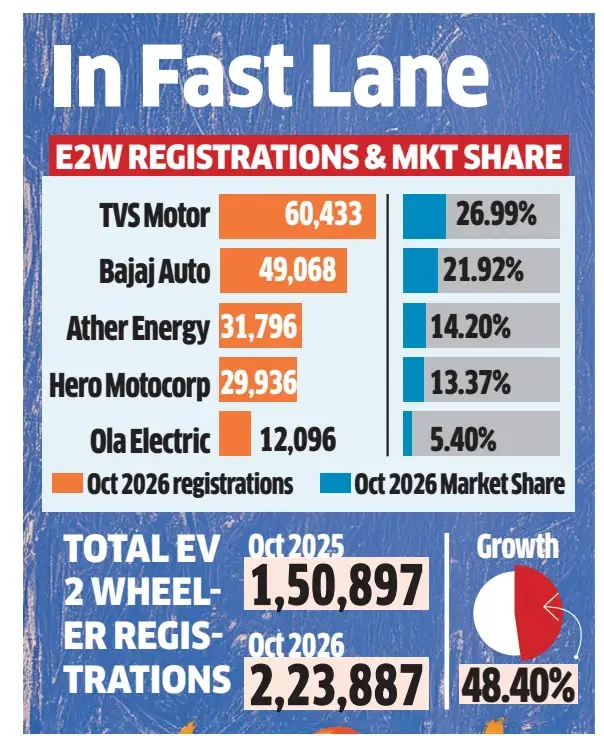
Electric two-wheeler sales hit record 2.24 lakh units in October on festive demand, new models
Electric two-wheeler sales in India surged 48% on-year to 2.24 lakh units in October, marking the highest monthly sales, as festive demand and new model launches helped drive adoption, according to Vahan vehicle registration data, a proxy for sales.
Market share:
- TVS Motor: Nearly doubled registrations to 60,433 units, raising its market share to 27% from 20.6% a year ago.
- Hero MotoCorp: Market share increased to 13.4% from 10.9%.
- Bajaj Auto: Maintained its market share at nearly 22%.
- Ola Electric: Registrations fell 26% YoY to 12,096 units, with market share declining to 5.4% from 10.9%.
- Ather Energy: Registrations rose 5% YoY to 31,796 units, but market share fell to 14.2% from 20%.
Growth drivers:
- Improvements in the charging ecosystem and greater awareness about EVs.
- Reduction in the cost of ownership.
- Fuel inflation, particularly following the West Asia crisis.
- Manufacturers broadened their product portfolios and targeted a wider set of consumers.
Other Top Stories By Our Reporters

DSCI proposes rules for AI liability: The Data Security Council of India (DSCI) has outlined an industry framework for assessing liability when autonomous artificial intelligence (AI) agents cause harm, proposing that responsibility be traced across the technology value chain based on the decisions each participant makes and the controls it can enforce.
Consent managers weigh options to monetise services: Companies preparing to register as consent managers starting November 13 under India’s data protection framework are yet to settle on a commercially viable revenue model, with industry players divided over who should bear the cost: data fiduciaries, technology companies, consumers or the government.
Global Picks We Are Reading
■ These firms you’ve never heard of are feeding fears the AI bubble could burst (BBC)
■ Meta Built Humanoid Prototype With Chinese Startup To Ramp Up Robotics Push (The Information)
■ What Democrats Can Learn From New York’s Data Center Moratorium (Wired)