

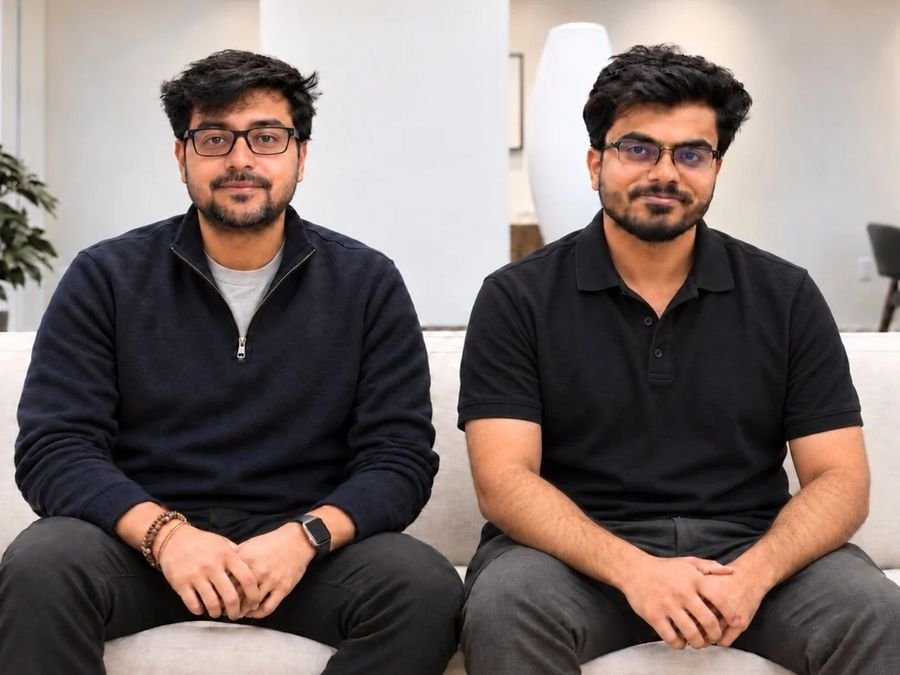
BioStack, a San Francisco-based healthcare data startup that turns scattered hospital records into datasets for training medical AI, has raised $9.5 million in a seed funding round led by Peak XV, DCVC and Afore Capital.

Afore Capital, DCVC, Emerson Collective, SV Angel, Verdict Capital, Streamlined Ventures and Y Combinator also took part. The valuation was not disclosed.
BioStack said the funding will go towards expansion across the US and international markets, development of its technology platform, and hiring for its engineering and research teams.
Founded in 2025 by Mishra and Parth Patwa, who serves as chief technology officer (CTO), BioStack was part of Y Combinator’s Spring 2026 batch and has a team of 11.
Before founding BioStack, Mishra conducted cancer genomics research at Stanford, Yale, Carnegie Mellon and the Max Planck Institute. He also worked with AI labs as an early researcher on reinforcement learning tasks in healthcare and biotechnology. He holds degrees from IISER Mohali and Carnegie Mellon.
Patwa is a former generative AI scientist at AWS and a former researcher at MIT. He has published more than 40 papers, with over 1,800 citations, at machine learning venues including CVPR, NeurIPS and EMNLP, and holds a master’s degree from UCLA.
What BioStack does
The startup is building a healthcare data network that spans the US, India, Brazil and Argentina, with access to more than 100 million de-identified patient records. It works with hospitals in all four countries.
Patient information in most health systems sits in separate places: doctors’ notes in one system, lab results in another, scans in a third. BioStack pulls these together into longitudinal records that track a patient over time, linking clinical notes, laboratory results, medical imaging, medications, treatment histories and outcomes.
From this de-identified data, collected from each provider system, it builds proprietary datasets for medical research, drug development and the training and evaluation of healthcare AI models. The startup lists uses such as disease modelling, biomarker discovery, patient stratification and analysis of how patients respond to treatment.
Its platform also includes workflows built around each healthcare provider and its own data privacy protocols.
BioStack claims to have combined several hundred thousand X-rays, MRI and CT scans, and several million telehealth audio transcripts with pathology and other clinical records. The resulting dataset, according to the company, can be used to train AI agents that help clinicians assess treatment options and likely patient outcomes.
“Collecting every event linked to each patient enables a view of what happens at each stage of a patient’s journey,” said Sanat Mishra, co-founder and CEO of BioStack.
“We’re building the infrastructure that connects all of the clinical information and makes it useful, both for clinicians making decisions today and for the researchers and AI developers building the future of medicine,” he added.
The India cancer vaccine link
In India, BioStack is helping connect cancer patients with an investigational cancer vaccine programme. It said the clinical information of participating patients supports the development work of biotech companies, while eligible patients may get access to highly personalised investigational treatments.
It did not name the biotech company or the vaccine involved.
Pushpak Kedia, VP at Peak XV, said, “The next frontier of healthcare AI will depend not only on better models, but on access to high-quality, longitudinal data that reflects how patients are treated over time.”
The round comes as investor money into healthtech has grown this year even as deal counts have fallen. Healthtech companies globally raised $22.8 billion in equity funding across 1,150 rounds so far in 2026, compared with $19.9 billion across 1,530 rounds in the same period of 2025, according to data from Tracxn. That is a rise of about 15% in funding, with roughly 25% fewer rounds.