

Chennai-based deeptech startup Viridian Ingni Propulsion has raised Rs 1.47 crore in a pre-seed funding round led by Inflection Point Ventures (IPV).

The startup builds electric motors, controllers and firmware for electric vehicles, drones, robots and industrial machines.
Separately, it has received Rs 53.75 lakh in grants from SIPCOT, MeitY Startup Hub, NIDHI PRAYAS, the Rural Technology and Business Incubator (RTBI) at IIT Madras Research Park, and Cummins CSR.
Together, the equity round and the grants bring the capital the startup has received to about Rs 2 crore.
What the money will be used for
Viridian Ingni said the funds will take it from validated prototypes to pilot production. The money will go into manufacturing tooling, a pilot production line, certification and homologation with ARAI and ICAT, validation of its motor controller firmware, hiring for engineering and business roles, and working capital for its first customer deliveries.
The startup has letters of intent for 350 motors from two customers, Crop Xplore and Yali Mobility. Viridian Ingni has a five-member engineering team and said it is pre-revenue.
Two motor technologies for different jobs
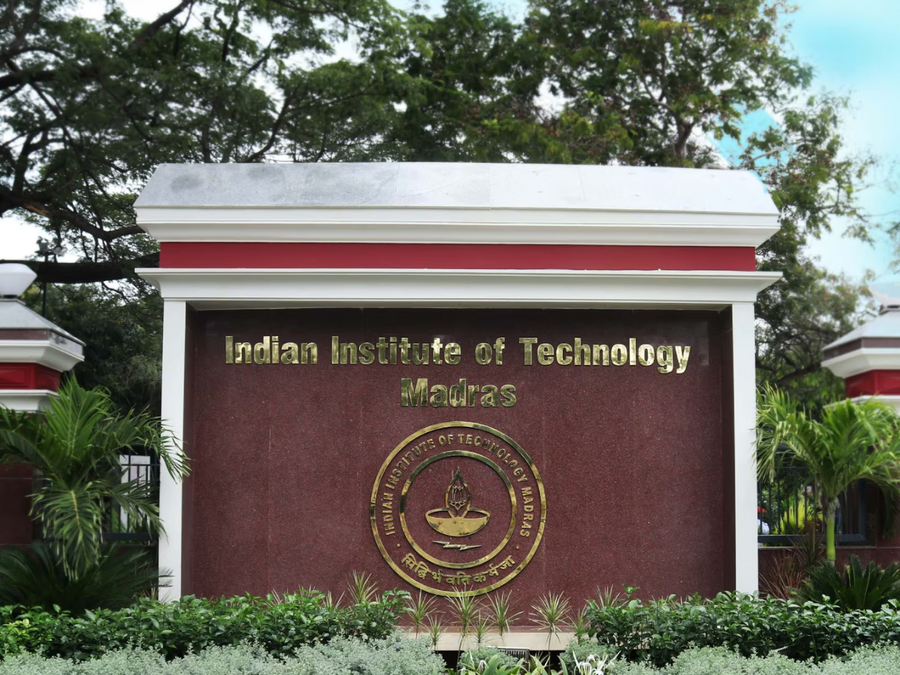
Founded in February 2024 by Sriram G, who serves as its CEO, Viridian Ingni Propulsion is incubated at IIT Madras Research Park in Chennai. The startup works on two types of motors. Its ferrite PMa-SynRM motors use no rare earth magnets and are designed for e-rickshaws, two-wheelers, HVAC systems, compressors and solar pumps.
Meanwhile, its rare earth permanent magnet synchronous motors (PMSM) are aimed at applications where power density is critical, including drones, collaborative robots, automated guided vehicles and marine applications.
The startup’s first listed product is an L3 e-rickshaw motor. According to the company, the 48V motor has a rated power of 1.2 kW, a peak power of 2 kW and a peak efficiency of 94%. It weighs 8 kg and supports gear ratios of 10:1, 12:1 and 16:1.
“When we started Viridian Ingni, the conviction was simple, India designs very few of its own propulsion systems, and almost none end-to-end,” Sriram G said.
“We build the motor, the controller and the firmware together, and we choose the right magnet technology for each application rather than forcing one solution everywhere,” he added. “The goal is to make Indian-designed propulsion the default choice for EV, drone and industrial OEMs, not the fallback.”
Mitesh Shah, co-founder of IPV, said the startup was “addressing a critical gap in India’s EV and propulsion ecosystem by developing its entire technology stack, including motors, controllers and firmware, in-house.”
“Its ability to adapt motor technology across applications, from e-rickshaws to drones, sets it apart in both domestic and global markets,” Shah said.
IPV said it has invested over Rs 900 crore across more than 280 startups, and backed 16 startups in the first quarter of 2026.
Why rare earth-free motors matter
Rare earth permanent magnets are used in electric vehicles, renewable energy, electronics, aerospace and defence, and India relies heavily on imports of these magnets, mainly from China. Motors built on ferrite magnets do not need them.
The government is also trying to build local magnet supply. In November 2025, the Union Cabinet approved a Rs 7,280 crore scheme to promote manufacturing of sintered rare earth permanent magnets. It aims to set up 6,000 tonnes a year of integrated magnet making capacity across five companies chosen through global bidding.
India’s EV motor market was valued at about $0.90 billion in 2024 and is projected to reach $2.89 billion by 2030, a compound annual growth rate of 21.5%, according to MarkNtel Advisors. Grand View Research puts the global EV traction motor market at $12.57 billion in 2024 and expects it to reach $74.17 billion by 2030.